Why Accra Has a Waste Problem (And It's Not What You Think)
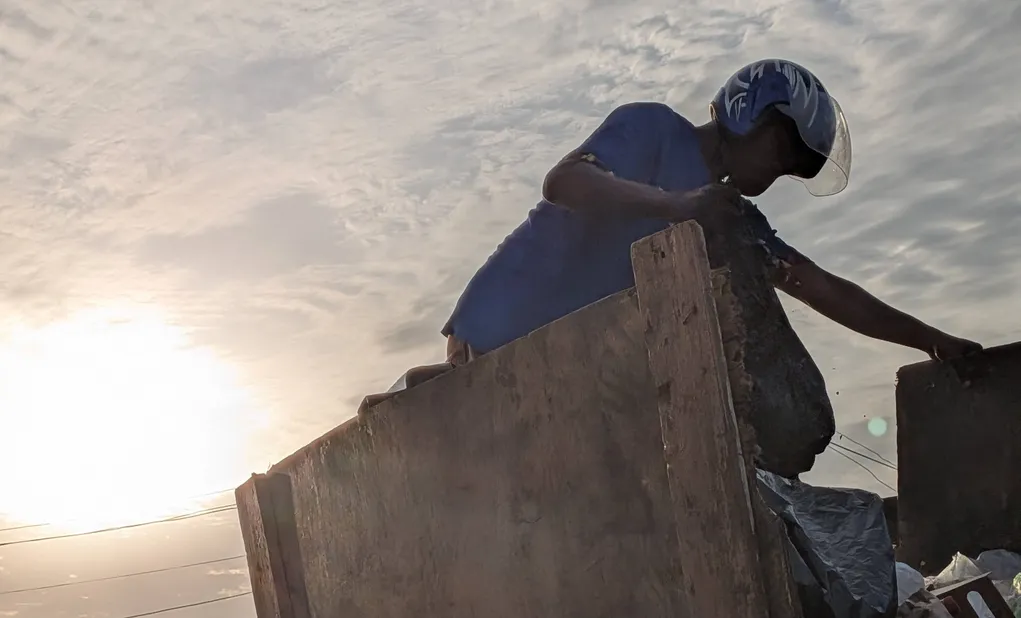
Ask three people in Accra why the city has a waste problem and you will get three answers. The neighbour who dumps in the gutter. The contractor who never shows up. The assembly that doesn’t enforce anything. All three are real frustrations. None of them is the actual root cause.
The real cause is structural. Most of us never hear it because nobody in the public conversation has an obvious incentive to explain it.
The root: nobody owns the landfills
Most cities the size of Accra have municipal landfills, owned and operated by the city government. Accra does not. The metropolitan, municipal and district assemblies hand out collection contracts. The disposal end is somebody else’s problem.
“Somebody else” is the formal waste companies themselves. Zoomlion, Jekora, Asadu, J. Stanley Owusu and the other contractors you see on the road also operate their own private dump sites. A handful of those sites are engineered landfills. Most are not. The city signs the collection contract. The company has to find a hole.
This worked for a while. When Accra was smaller, the holes were on the outskirts. As the population grew, the outskirts became neighbourhoods. Oblogo closed. Mallam closed. The original Achimota site closed. Kpone is the latest to be wound down. No new engineered landfills have been built to replace them.
There are several reasons for that: land prices, community opposition, no public budget, no clear public mandate. The result is the same. Accra now has fewer legal places to drop a load than it had ten years ago, while generating more waste than ever.
The contract trap
Here is where the structural trap shows up. To win a municipal collection contract, a waste company must show the assembly where its trucks will dump. No disposal site, no contract. Small operators are locked out before they start.
Informal collectors fall on the wrong side of the same trap. They pick up the households the formal contractors miss, but they have nowhere legal to drop the load. They pay to use somebody else’s transfer station when they can afford it, dump where they can when they cannot, or stop collecting until they figure out a new arrangement.
The roads do not help. Many inner-city neighbourhoods are simply not navigable by a compactor truck. Untarred. Uneven. Unmotorable in places. Formal companies quietly skip these routes. Aboboyaa-based collectors fill the gap. But the aboboyaa collectors are stuck in the same dump-site bind as everyone else.
So when somebody asks why Accra is buried in trash, the honest answer is layered. The people who own the trucks cannot always reach the houses. The people who can reach the houses cannot always reach a legal dump. And the city that is supposed to make all of this work does not run any of the actual disposal infrastructure.
What this looks like at a household level
Pick a household in Madina. On paper they are on the route of a formal collector who has won the area contract. In practice, the truck shows up some weeks and not others. The household still receives bills, sometimes for months when nothing was collected at all. So they call an aboboyaa operator they know, or they switch to a service like Jumeni, or they let the bin overflow until something gives.
Nobody is keeping a central record of any of this. The household pays whoever actually picks up the trash. The formal company invoices regardless. The assembly trusts that the work happened. Most assemblies lack the staff or budget to verify. The waste itself ends up at a private landfill, a transfer station, a roadside skip, a drain, or a vacant lot. Which one varies by week.
When a landfill closes, the whole system stutters
The Kpone closure is the clearest recent example. When the receiving end of a major route went down, the trucks and tricycles that depended on it had no organised way to reroute. Some operators drove further. Some dumped illegally. Some stopped collecting until they could find a new place to drop. Pickups that did not happen one week piled up the next. Bins that overflowed in front of houses started feeding the drains. By the time the rains came, the unmoved waste had a second job: blocking storm runoff and flooding the same neighbourhoods that generated it.
If there had been a single shared view of where loads needed to go and which sites still had space, the closure would have been an inconvenience instead of a crisis.
The street already has its own coordination
Walk through any Accra neighbourhood and you will find one running on phone numbers, WhatsApp, family connections and decades of habit. A household knows which aboboyaa operator to call. An operator knows which transfer station accepted a load last week and which one was full. A recycler knows which informal sorter brings clean plastic on Thursdays. A market vendor knows who picks up at closing time.
This is coordination. It is fragile, opaque, untraceable, and at the mercy of a single missed call. But it works often enough that most of the city’s waste actually gets moved.
The work is not to replace this network. It is to give it the information layer that has been missing.
What a working system would actually look like
Plain version, no jargon. A waste system that worked properly in Accra would have:
- A record of every household and business that wants pickup, the schedule they agreed to, and whether the pickup actually happened.
- A way to tell collectors where to go next, and where to drop the load, accounting for whatever is open or closed today.
- Verified disposal. If a tricycle leaves a neighbourhood with 200 kg of refuse, somebody knows whether 200 kg arrived at a legal site.
- Digital payment on both sides, so the household pays whoever actually collected and the collector receives the money directly, with receipts both ways.
- A live picture for assemblies and residents of which neighbourhoods are being served, by whom, at what cost, and where the system is failing.
None of this requires new trucks, new landfills, or expensive hardware. It requires that the actors who already exist (households, collectors, transfer stations, landfills, recyclers, assemblies) actually talk to each other in something other than personal relationships and end-of-month invoices.
At Jumeni, this is the bet we are running. Collectors who already serve a neighbourhood get plugged into a dispatch and payment system. Households get a service they can actually rely on. The aboboyaa keeps moving. The informal collector keeps earning. The destination is recorded. The assembly gets visibility it could never extract from contractors alone. It is one way of building the missing layer. There are others. The point is that the layer is buildable today.
Until we fix the bottom, the top keeps collapsing
The hard truth most Ghanaians do not hear is this. Accra’s waste problem is not a discipline problem and it is not a contractor problem. It is a system that was set up to fail.
Two things have to change at the same time. Public investment has to come back to the disposal end: engineered landfills, transfer stations within reach, and road improvements that let trucks actually serve the neighbourhoods that need them. None of this is glamorous and none of it wins elections. It is still the actual fix.
And the information layer above all of that has to get built. Most of the people doing the work already exist. They just need a system that pays them, tracks the loads, and tells the assembly which streets are still being missed.
Until we fix the bottom, the top will keep collapsing. Every flood, every market overflow, every landfill closure is a reminder.